It's Just A Font?

Your Strategic
Digital Partner

Building excellent quality, cost-effective bespoke web systems, technologies & websites that grow with your business.


If you have a project in mind and would like to speak with one of our consultants we'd be delighted to hear from you...

Let's Begin

Warning: implode(): Invalid arguments passed in /home/tr10/public_html/templates/frontend/index.php on line 144


Fonts come in all shapes and sizes, and each typeface brings its own unique features that subconsciously affect the customer whilst they take it in through a design. The main classes of type are Serif, Sans-Serif and Script. There are of course many, many sub-categories within each class, but we’re going for more a crash course in this article, as opposed to a car crash of information.
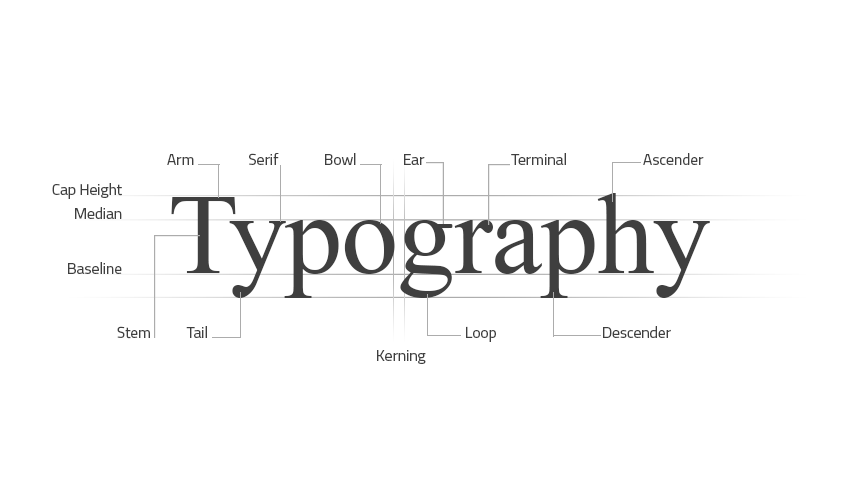
Annotated Typography

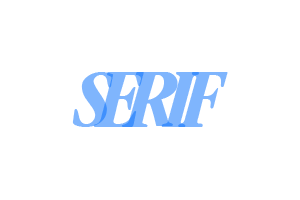
Serif Typeface

Serif

Serif fonts are more traditional in their appearance. To put it simply if a font has small lines attached to the main strokes of the letters, it’s a Serif font. They’re great for print documents and title fonts, although in recent years there’s been a shift in opinion as to whether Serif fonts in long passages of text are as legible as they could be.
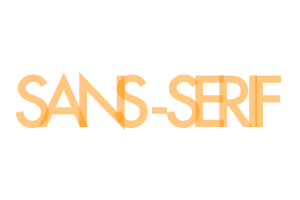
Sans-Serif Typeface

Sans-Serif

Sans-Serif fonts don’t have the same protruding details that Serif fonts do. Because of this they look a lot more modern in their appearance. I personally really enjoy using Geometric Sans-Serif fonts as they’re as modern as they are legible. Futura for instance is easily one of my most favoured ‘go-to’ fonts.
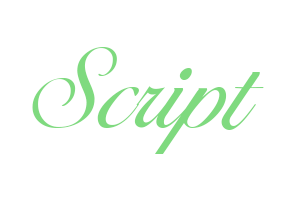
Script Typeface

Script

We’ve all seen Script fonts. Whether it’s in the form of a questionable tattoo, restaurant menu signage, or on your favourite brand of soft drink packaging. Script fonts tend to be split into two sub-categories; Formal, and casual. Formal Script fonts showing more of a 17th century handwritten letterform style, very precise and pretty. Casual Script fonts more often than not depicting hand-writing or brush strokes.
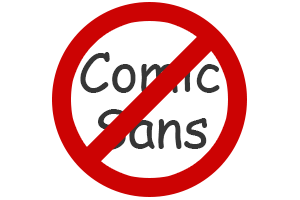
No Comic Sans

They All Have A Place

Apart from Comic Sans, which doesn’t. Ever. But how do you know when it’s best to use a certain font? Simply seeing your wording in your chosen font and taking your initial reaction at face value will give you an immediate indication of whether you’re using a suitable font family. There’s definitely an art to knowing which font works for certain settings, and it’s a skill in which I’m constantly looking to develop. The simplest explanation is that if you had a law firm, you wouldn’t use a hand-written script font for your logo would you? It just wouldn’t ‘fit’ the scene.

The next time you’re struggling to figure out whether it’s a Serif, a Sans-Serif or a Script font that you’re looking to use, just break it down and remember what each font signifies. There’s certainly not a ‘one size fits all’ approach to type, and as with almost everything in design – there will be an exception to the rule. But by giving each type face a personality and remembering the feelings that each font conveys you’ll soon be on the road to knowing almost instinctively which fonts suit each situation. Referring back to the paragraphs describing each style of font will definitely aid the process, and as with everything creative; if it doesn’t look right, it probably isn’t! Don’t be scared to experiment with type. If the piece you’re working with doesn’t look right, ask yourself why, and use your own feelings and thought processes to further your design and your knowledge in one swift action.

Typography is an art form in itself, and as we move towards an era of open source font directories there’s never been a better time to have a healthy interest in seeing what’s out there. The right font can really make all the difference to your design, and take your business image to the next level. Or alternatively, get in touch with us, and I’ll take care of it all for you!
  • Case Study: Arcinova

    We were contracted to create a website for a new Contract Research and Development Organisation based near Alnwick, Northumberland. The company formed as a result of a multinational company’s plans to close their Alnwick site. Local businessman Ian Shott stepped in and agreed to purchase the site and save over 50 jobs! The business required branding, website design and additional printed marketing materials.

    Read Full Case Study
  • Case Study: Safeguard Call Handling

    As the UK's principal supplier of call centre support for new build homes warranty telephone support the importance of a comprehensive system to manage this complex operation can't be overstated. Safeguard approached us having reached the limits of and completely outgrown their existing system and their system designer's ability to support their operation, looking for a complete rebuild and data migration.

    Read Full Case Study
  • Case Study: Dawson & Sanderson

    Booking a holiday is one of the most complex transactions that a website can set out to achieve, with lots of information to display in an engaging format and important regulatory requirements along with a detailed data capture to complete the booking and a high value credit card payment, all of which must reassure the customer and make the sale.

    Read Full Case Study
  • Case Study: Kielder Observatory

    From the outset it was clear to us that Kielder Observatory had outgrown their website and order management system, they had a number of separate systems to manage orders, ticketing, gift vouchers, reporting, guest check-in, staff intranet services and gift shop sales, all centered around an overstretched Wordpress website.

    Read Full Case Study
  • Case Study: HomeFuels Direct

    When we first met Homefuels Direct they were struggling to manage a complex business from an overstretched spreadsheet and a small, static website. By building a superb, user-friendly website supported by our digital marketing team and sophisticated CRM and order management system we have taken Homefuels Direct from a small regional player to one of the nations largest and most loved heating oil suppliers.

    Read Full Case Study
  • Case Study: Mazda

    Mazda Financial Services approached tr10 to build a state-of-the-art credit underwriting system to replace a number of spreadsheets and financial tools in use across Europe that had become unwhieldy. Each spreadsheet had significant regional variation to accomodate accounting and legal processes in each country which had made the prospect of building a system, prior to our involvement, prohibitively complicated.

    Read Full Case Study

We'd love to meet with you...

It'd be great to find out more about your project and discuss how we can help
Contact Us


Company Info
  • Opening HoursMonday - Friday
    9am - 6pm
  • Phone0191 265 8396
  • Office Addresstr10.com
    1 Keel Row
    The Watermark
    Gateshead
    NE11 9SZ

Thinkroomten Ltd. T/A tr10.com Registered in England & Wales #6170687 VAT: 974 721 688. Members of the North East Chamber of Commerce. Registered Office: South View Cottages, Old Eldon, Co. Durham DL4 2QX